When someone searches Google for a service in their area, they usually want to find a business that can meet their needs without wasting time. Whether they are looking for a dentist, plumber, accountant, restaurant, or digital marketing agency, appearing prominently in local search results can help a business connect with potential customers at the right moment.
However, achieving strong local search visibility involves more than creating a website or setting up a Google Business Profile. Businesses need accurate information, relevant website content, a trustworthy online presence, and a consistent approach to local search optimisation.
If you want to improve your local SEO rankings in 2026, the key is to make your business more relevant, accessible, and trustworthy to both potential customers and search engines.
In this guide, we will explore practical ways to strengthen your local SEO strategy, improve Google Maps visibility, attract relevant local visitors, and turn online discovery into genuine business opportunities.
What Is Local SEO?
Local SEO, or local search engine optimisation, is the process of improving a business’s visibility in search results for location-related searches. For example, someone searching for “dentist near me,” “accountant in London,” or “plumber in Toronto” is looking for a service connected to a particular location.
Search engines use various signals to identify businesses that may be relevant to these searches. Local SEO services helps businesses provide the information, website content, and online signals needed to improve their chances of appearing for relevant searches.
Local SEO commonly involves:
Managing local SEO involves several connected activities, from keyword research and Google Business Profile optimisation to website improvements, review management, technical checks, and performance tracking.
For a business owner, handling every task alongside day-to-day operations can be challenging.
Professional local SEO support can help identify the issues affecting your visibility, prioritise improvements, and develop a strategy based on your business goals and target market.
Depending on your requirements, this may involve:
- Auditing your existing local search presence.
- Identifying relevant service and location keywords.
- Improving your Google Business Profile.
- Optimising important website pages.
- Resolving technical SEO issues.
- Strengthening relevant local authority signals.
- Monitoring rankings, enquiries, and conversions.
The right approach depends on your business, competition, location, and current online presence. A strategy should be based on these factors rather than a fixed checklist applied identically to every business.
If you want to understand how these activities can work together, explore our Local SEO services to learn more about improving your business’s visibility in relevant local searches.
- Google Business Profile optimisation.
- Local keyword research.
- Website and service-page optimisation.
- Customer reviews and reputation management.
- Consistent business information across relevant directories.
- Local link building and brand visibility.
- Technical SEO and website performance.
- Local ranking and conversion tracking.
The objective is not simply to appear higher in search results. It is to help potential customers discover your business when they are looking for the services you provide.
How Does Google Determine Local Rankings?
Before implementing a local SEO strategy, it is important to understand the main factors Google identifies for local search rankings.
According to Google’s published guidance, local results are primarily influenced by three factors: relevance, distance, and prominence.
1. Relevance
Relevance refers to how well a business matches what someone is searching for.
For example, a person searching for a physiotherapist will generally be looking for a business that provides physiotherapy services.
You can help Google understand your business by maintaining complete and accurate business information, choosing appropriate business categories, and clearly describing your services on your website.
2. Distance
Distance refers to how far a business is from the person performing the search or the location specified in the query. This is particularly important for businesses serving a specific geographic area.
A business cannot legitimately change its physical location simply to improve rankings in another area. Instead, it should focus on serving its actual market and accurately communicating where and how it operates.
3. Prominence
Prominence relates to how well-known a business is.
Google may consider information such as links from other websites and customer reviews when assessing prominence. Building a credible online presence through genuine customer feedback, relevant local mentions, quality content, and legitimate links can support your broader local SEO efforts.
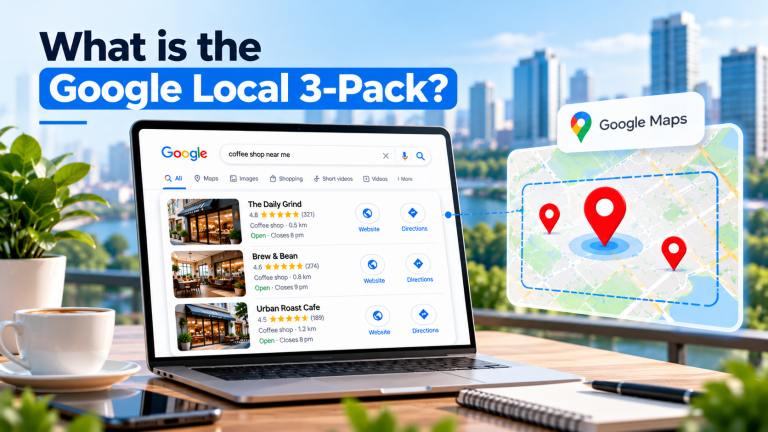
These 3factors play an important role in determining which businesses appear in Google’s local results. To understand how these results are displayed and why they matter for local businesses, read our guide to the Google Local 3-Pack.
10 Practical Ways to Improve Your Local SEO Rankings
Improving your local SEO rankings requires a strategic approach that combines Google Business Profile optimisation, local keyword research, website optimisation, quality content, genuine customer reviews, consistent business information, relevant local backlinks, technical SEO, accurate rank tracking, and ongoing performance improvements. By focusing on these 10 practical areas, you can strengthen your local search visibility, reach more relevant customers, build trust, and create more opportunities to generate enquiries and grow your business.
1. Optimise Your Google Business Profile
Your Google Business Profile is an important part of local SEO for eligible businesses. It can help potential customers discover your business on Google Search and Google Maps, understand what you offer, check your opening hours, and contact you.
Start by reviewing your existing profile and ensuring that the information is complete and accurate.
Focus on the following areas:
- Business name: Use your real-world business name without adding unnecessary keywords.
- Primary category: Choose the category that most accurately represents your main business activity.
- Additional categories: Add relevant categories where appropriate.
- Business description: Explain what your business does and which customers it serves.
- Services: Add accurate details about the services you actually provide.
- Contact information: Keep your phone number, website, and other relevant details up to date.
- Opening hours: Maintain accurate regular and special hours.
- Photos: Upload genuine, relevant images that help customers understand your business.
Avoid adding keywords to your business name when they are not part of your actual business name. Also, do not create duplicate profiles for the same business or use misleading business information.
A well-maintained profile gives customers useful information and helps Google better understand your business.
2. Find the Right Local Keywords
Keyword research helps you understand how potential customers search for your services. Instead of choosing keywords based only on search volume, identify terms that reflect your services, target locations, and customers’ needs.
For example, a digital marketing agency might investigate searches such as:
- Local SEO services.
- Local SEO expert.
- Google Maps SEO services.
- Local SEO services for small businesses.
- Local SEO consultant.
Businesses serving a particular geographic market can also research relevant location-specific variations.
However, do not assume that every keyword containing a city name deserves a separate website page. The right approach depends on your actual service areas, the search intent, and whether you can provide useful, unique information for that location.
How to Research Local Keywords
Start by listing your main services and the problems your customers want to solve. Then use tools such as Google Search Console, Google Keyword Planner, and relevant SEO platforms to investigate search queries, demand, and competition.
Pay attention to:
- Service-related searches.
- Location-specific searches.
- Questions potential customers ask.
- Search terms that generate relevant enquiries.
- Keywords for which your website already receives impressions.
Group related keywords according to search intent. This helps you create focused service pages and supporting articles instead of publishing multiple pages that compete for the same searches.
3. Optimise Your Website for Local Search
Your website should make it easy for search engines and potential customers to understand what you offer and whom you serve.
Start with your main service pages. Each important page should explain the service clearly, address customer questions, and provide a straightforward next step.
Here are some practical optimisation areas:
Page titles: Write descriptive title tags that communicate the page’s subject and, where relevant, its intended geographic market.
Meta descriptions: Summarise the page accurately and explain why someone should visit it. Although meta descriptions are not a direct ranking factor, they can help users understand the page in search results.
Headings: Organise content using a clear H1 and logical H2 and H3 headings.
Service content: Explain your services, process, benefits, suitability, and frequently asked questions in meaningful detail.
Internal links: Connect related pages using descriptive anchor text so visitors can discover useful information and search engines can find important pages.
Images: Use relevant images with descriptive file names and appropriate alternative text when the images convey meaningful information.
Contact information: Make it easy for visitors to find your contact details and understand how to enquire.
For a business targeting multiple locations, create location pages only when each page serves a genuine purpose. Each should contain useful information relevant to that location rather than simply repeating the same content with a different city name.
4. Create Useful Content Around Your Services and Locations
Content helps your website answer the questions potential customers ask before choosing a business.
However, publishing more articles does not automatically lead to better rankings. The content should be relevant to your audience and offer something genuinely useful.
For example, a roofing company could publish articles about choosing roofing materials, identifying roof damage, understanding maintenance requirements, and preparing for a roofing project.
A local SEO agency could publish practical guides about Google Maps visibility, local keyword research, Google Business Profile optimisation, and diagnosing local ranking problems.
Useful content can help you:
- Answer questions before customers contact you.
- Demonstrate knowledge of your services.
- Attract relevant search traffic.
- Support your main service pages through internal links.
- Help potential customers make informed decisions.
Focus on depth, accuracy, and usefulness rather than repeating the same keyword throughout an article.
For MunishSEO, supporting articles about Google Maps SEO, local ranking improvements, and local SEO audits can complement the main Local SEO services page by addressing related informational searches.
5. Earn Genuine Customer Reviews
Customer reviews help potential customers evaluate a business before deciding whether to contact or visit it.
They can provide insight into customer experiences, service quality, communication, and reliability.
Reviews also form part of Google’s guidance on local prominence.
To manage reviews effectively:
- Ask genuine customers to share honest feedback about their experiences.
- Make it easy for customers to leave a review without pressuring them.
- Respond professionally to positive and negative feedback.
- Address legitimate concerns where possible.
- Use customer feedback to identify opportunities to improve your service.
Avoid buying reviews, offering incentives in exchange for reviews where prohibited, or asking customers to post misleading feedback.
Do not focus exclusively on achieving a particular star rating. Genuine feedback and professional responses can help build customer confidence while providing useful information about your business.
6. Keep Your Business Information Consistent
Business information can appear across your website, Google Business Profile, industry directories, social profiles, and other online platforms.
When this information is inaccurate or outdated, potential customers may struggle to contact you or confirm that they have found the right business.
Review your important business details, including:
- Business name.
- Address, where applicable.
- Phone number.
- Website URL.
- Business hours.
- Main services.
Correct significant errors on your website and on relevant directories where you control or can request changes.
Prioritise reputable, relevant platforms rather than submitting your details to every directory you can find.
Consistency is good for customer experience and supports reliable business information across the web. However, directory listings should not be treated as a shortcut to guaranteed rankings.
7. Build Relevant Local Links and Brand Mentions
Links from other websites can help people discover your business and contribute to your website’s broader authority.
For local businesses, relevant links and mentions can come from legitimate relationships within the community or industry.
Consider opportunities such as:
- Local business associations.
- Relevant industry organisations.
- Community initiatives and events.
- Genuine partnerships with complementary businesses.
- Useful resources that other websites may want to reference.
- Expert contributions to relevant publications.
The goal should be to earn links because your business, expertise, or content provides value.
Avoid buying large quantities of low-quality links or participating in schemes designed primarily to manipulate rankings. These approaches can create risk without delivering meaningful business value.
A smaller number of relevant, editorially justified links may be more valuable to your overall marketing efforts than a large volume of unrelated placements.
8. Improve Your Website's Technical SEO
Even useful content can struggle to perform well if search engines have difficulty discovering, crawling, or understanding the website.
Technical SEO helps ensure that your important pages can be accessed and interpreted correctly.
Review the following areas:
Indexing: Check that important service pages are eligible to appear in Google Search and are not accidentally blocked or marked with inappropriate indexing directives.
Crawlability: Ensure that search engines can discover important pages through working internal links.
Mobile usability: Make sure the website works properly on smartphones, where many local searches take place.
Page experience: Review loading performance, responsiveness, and visual stability.
Broken links: Fix broken internal links and review unnecessary redirects.
XML sitemap: Maintain an accurate sitemap containing the URLs you want search engines to discover.
Structured data: Where appropriate, implement accurate structured data that describes your business and follows Google’s guidelines.
For example, relevant LocalBusiness structured data can help Google understand information about an eligible local business. It does not guarantee higher rankings or special search-result features.
Technical SEO services is not about making every tool report a perfect score. It is about resolving problems that prevent customers and search engines from using your website effectively.
9. Track Local Rankings and Business Performance
You cannot reliably evaluate your local SEO strategy by looking at one ranking or checking Google Maps from a single device.
Local search results can vary depending on the searcher’s location, query, and other factors. A business may appear prominently in one area but be less visible a few kilometres away.
For this reason, track local performance using a consistent methodology.
Monitor several indicators:
Local keyword rankings: Check important search terms across relevant locations.
Google Business Profile performance: Review the available performance data, including relevant searches and customer interactions.
Organic search performance: Use Google Search Console to review impressions, clicks, click-through rates, and search queries.
Website engagement: Assess whether visitors reach useful pages and take meaningful actions.
Leads and conversions: Track calls, contact form submissions, bookings, and other relevant enquiries where measurement is available.
Business outcomes: Where possible, connect enquiries to qualified leads, customers, and revenue.
Ranking improvements can be useful indicators, but they are not the final objective. A successful strategy should help your business become more discoverable by relevant customers and make it easier for those customers to take action.
10. Review Your Strategy and Improve It Consistently
Local SEO is not a one-time task. Business information changes, competitors improve their websites, customer needs evolve, and search results can fluctuate.
Review your performance regularly and use the data to decide what needs attention.
For example:
- If a service page receives impressions but few clicks, review its title and description.
- If visitors reach a service page but rarely enquire, assess the page’s clarity, relevance, trust signals, and contact options.
- If a Google Business Profile contains outdated information, correct it promptly.
- If important pages are not being indexed, investigate the technical cause.
- If a target keyword performs poorly, examine search intent, competition, location, and the quality of the page before making changes.
Avoid changing multiple elements without a clear reason and then assuming that any ranking movement resulted from one particular change.
A consistent review process helps you understand what is working, identify weaknesses, and prioritise the actions most likely to benefit your business.
Common Local SEO Mistakes to Avoid
Even businesses investing time and money in SEO can make mistakes that limit their progress.
Here are some common issues to watch for.
Targeting Too Many Keywords on One Page
Trying to target every service, location, and variation on one page can make the content unfocused.
Give each important page a clear purpose and organise related keywords around the same search intent.
Creating Thin Location Pages
Publishing nearly identical pages for dozens of cities may add little value for visitors.
Create location pages when you have something meaningful to say about the services you provide in that market.
Adding Keywords to Your Google Business Profile Name
Your business name should reflect the name used in the real world.
Adding extra keywords solely to influence rankings can violate Google’s guidelines.
Ignoring Customer Reviews
Leaving genuine feedback unanswered or failing to address recurring customer concerns can weaken your customer experience.
Establish a consistent process for reviewing and responding to feedback.
Focusing Only on Rankings
A ranking report cannot tell you everything about business performance.
Measure enquiries, qualified leads, conversions, and other meaningful outcomes alongside search visibility.
Expecting Immediate Results
Local SEO improvements do not follow a guaranteed timetable.
The time required depends on factors such as your website’s current condition, competition, business prominence, location, and the work needed to address existing issues.
Set realistic expectations, track progress consistently, and use evidence to guide decisions.
How Long Does It Take to Improve Local SEO Rankings?
There is no universal timeline for improving local search rankings.
Some changes, such as correcting inaccurate business information or fixing a technical issue, can be implemented quickly. However, the impact of those changes on visibility may take longer to assess.
Other improvements, such as earning relevant links, developing useful content, building a stronger reputation, and competing in a crowded market, generally require sustained effort.
Your starting point also matters. An established business with a well-maintained website may face different challenges from a new business with little online visibility.
Instead of promising a specific ranking within a fixed period, establish a baseline and monitor meaningful indicators over time.
This approach helps you evaluate progress realistically and understand whether your strategy is moving in the right direction.
How Can Professional Local SEO Services Help?
Managing local SEO involves several connected activities, from keyword research and Google Business Profile optimisation to website improvements, review management, technical checks, and performance tracking.
For a business owner, handling every task alongside day-to-day operations can be challenging.
Professional local SEO support can help identify the issues affecting your visibility, prioritise improvements, and develop a strategy based on your business goals and target market.
Depending on your requirements, this may involve:
- Auditing your existing local search presence.
- Identifying relevant service and location keywords.
- Improving your Google Business Profile.
- Optimising important website pages.
- Resolving technical SEO issues.
- Strengthening relevant local authority signals.
- Monitoring rankings, enquiries, and conversions.
The right approach depends on your business, competition, location, and current online presence. A strategy should be based on these factors rather than a fixed checklist applied identically to every business.
If you want to understand how these activities can work together, explore my Local SEO services to learn more about improving your business’s visibility in relevant local searches.
Frequently Asked Questions About Improving Local SEO Rankings
Start by maintaining an accurate Google Business Profile, researching relevant local keywords, optimising your website, earning genuine customer reviews, building a credible online presence, and resolving technical SEO issues. Monitor your progress using consistent ranking and conversion data.
Yes. Google Business Profile is an important tool for eligible businesses that want to manage how their information appears on Google Search and Maps. Complete and accurate information can help Google understand your business and match it with relevant searches.
However, having a profile does not guarantee a particular position in local search results.
Google identifies relevance, distance, and prominence as the primary factors behind local results. Businesses can work on accurate information, service relevance, reputation, and their broader online presence, but they cannot directly control every factor, particularly the searcher's distance from the business.
Reviews help potential customers evaluate a business and are among the signals Google identifies in its discussion of local prominence. Encourage honest feedback, respond professionally, and use customer comments to improve your services.
Do not buy reviews or attempt to manipulate ratings.
Not necessarily. Create separate location pages when each page can provide useful, genuinely relevant information about your services in that area.
Avoid publishing large numbers of nearly identical pages solely to target different city names.
Choose a consistent tracking schedule that suits your business and competition. Weekly or monthly reviews can help you identify trends, but avoid making decisions based on isolated ranking changes.
Where relevant, compare performance across several target locations and review leads and conversions alongside rankings.
Yes, small businesses can compete for relevant local searches, although results depend on the market and competition. Focus on accurate business information, relevant services, a useful website, genuine reviews, and a credible local presence.
Prioritise searches where your business can genuinely meet customer needs rather than trying to compete for every broad keyword.
Yes. Eligible service-area businesses can use Google Business Profile to represent their services in the areas they genuinely serve, subject to Google's eligibility and profile guidelines.
Keep the profile accurate and do not use virtual offices, false addresses, or other misleading information to create an artificial local presence.
Final Thoughts
Improving local SEO rankings requires more than optimising a single profile or adding location keywords to a website. Businesses need a consistent approach that combines accurate business information, relevant website content, genuine customer feedback, technical health, and a trustworthy online presence.
Start by identifying the biggest weaknesses in your current local search strategy. Address the issues that matter most to your customers, track the results, and refine your approach as you gather more information.
Most importantly, measure success by more than rankings alone.
The real goal of local SEO is to help the right customers discover your business, trust what you offer, and take the next step towards becoming your customers.
If your business needs a clearer strategy for improving local search visibility, explore MunishSEO’s Local SEO services to learn how a structured approach can support your business goals. For more information about Mmydigital marketing services, get in touch with me now at +91-7710334774 or email me at contact@munishseo.com.